Will Under-Eye Fat Repositioning Also Remove My "Aegyo-sal" (Youthful Under-Eye Roll)?
Views : 214
Some people preparing for a consultation about under-eye fat repositioning worry more about another feature than the fat itself—namely, the "aegyo-sal" (the natural, youthful roll right below the lower lash line).
They fear that this youthful under-eye roll, which appears naturally when smiling, will disappear or become flattened after surgery.
This concern is completely understandable. Because the under-eye roll and the bulging under-eye fat are positioned right next to each other, it is easy to assume that altering one will inevitably affect the other.
To get straight to the point: the youthful under-eye roll and lower eyelid fat bags are entirely different anatomical tissues.
Today, we will explain why this concern is so common and clarify how the procedure actually affects your under-eye contour.

Why This Worry Is So Common
There are a few reasons patients considering under-eye fat repositioning worry about their under-eye roll:
1. Close anatomical proximity: The youthful under-eye roll (pretarsal fullness) sits directly along the lower eyelid margin, while the bulging fat bags sit just below it. Because there is no visible line dividing them on the surface, many people assume touching one affects the other.
2. Confusion between different procedures: Various surgeries are often lumped together under the general label of "lower eyelid surgery." While under-eye fat repositioning is performed through the inner conjunctiva without cutting the skin, traditional lower blepharoplasty involves incising the external skin and muscle. When a procedure manipulates layers close to the muscle, it can alter the under-eye contour—and that outcome is sometimes mistakenly attributed to fat repositioning.
3. Postoperative visual adjustment: Once bulging fat bags are smoothed flat, the overall under-eye contour changes. Some patients temporarily perceive their under-eye roll as reduced simply because the surrounding contrast is gone, even though the muscle structure itself remains completely intact.
Because of these factors, concerns about losing this youthful feature often arise even when the muscle is never touched.
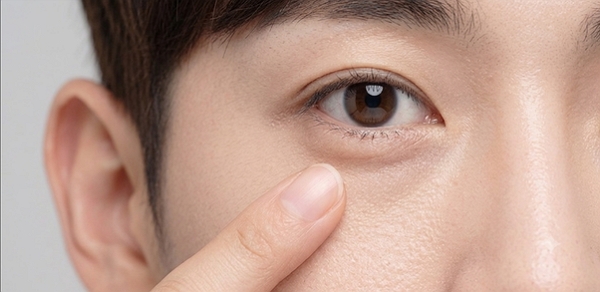
The Under-Eye Roll and Eye Bags Are Different Tissues
The youthful under-eye roll (aegyo-sal) is formed by the pretarsal orbicularis oculi muscle directly under the lower lash line; it naturally contracts and becomes prominent when you smile.
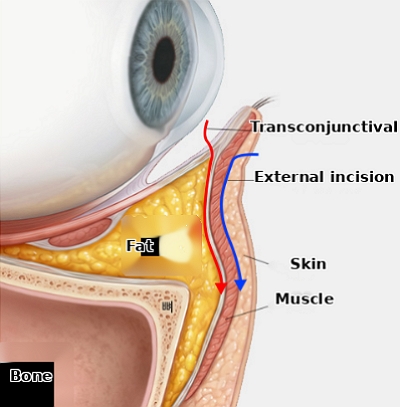
Under-eye fat bags, however, lie much deeper inside the orbital cavity that cushions the eye. A fibrous layer called the orbital septum serves as the anatomical barrier separating the outer muscle layer from the deep fat compartments.
Although they appear adjacent from the outside, they exist on entirely different anatomical planes: the muscle is superficial, while the fat rests deep behind the septum.
Why Transconjunctival Fat Repositioning Does Not Affect the Under-Eye Roll
Under-eye fat repositioning is performed transconjunctivally (through the inside of the lower eyelid). The surgeon accesses and repositions only the herniated fat located behind the orbital septum.
This approach does not cut through the skin or the outer muscle layer. Because all manipulation takes place behind the muscle, the orbicularis oculi muscle that creates your smiling roll is never disturbed.
In fact, once the heavy bulging fat beneath it is smoothed out, many patients find that their natural under-eye roll looks clearer and more defined.
Important Exceptions to Keep in Mind
If significant skin laxity is present, the surgical plan may differ. Even if the internal fat is repositioned, loose or excess skin can still sag. In such cases, procedures that address skin laxity—such as a dual lower blepharoplasty or skin pinch—may be recommended.
Because skin-excision procedures involve incisions closer to the muscle layer, your surgeon will carefully evaluate how to preserve your natural under-eye shape before proceeding.
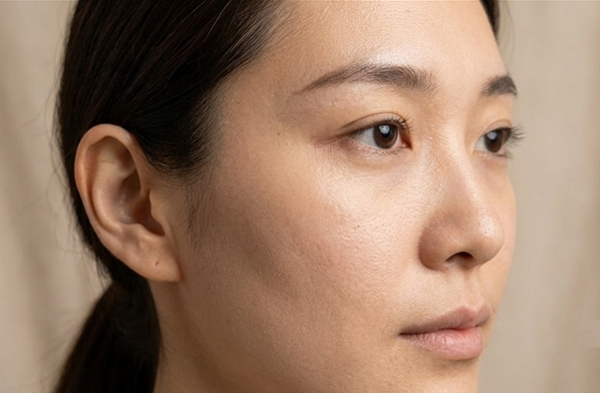
Why a Plastic Surgeon Carefully Evaluates the Under-Eye Contour
At our clinic, many international patients bring up this exact concern during their initial consultations. For this reason, we evaluate both the pretarsal muscle line and the protruding fat from your very first visit.
- Precise margin assessment: Independent of the protruding fat volume, we map out the exact height and thickness of your natural under-eye roll to plan the internal incision path safely.
- Comprehensive contour design: We view the line from the lower lash margin down to the cheek as a single harmonious contour. Because muscle tone and skin elasticity vary from person to person, the same amount of fat repositioning can create subtle differences in contour, which we thoroughly discuss during your consultation.
Before deciding on surgery, we recommend scheduling a personalized consultation with a board-certified plastic surgeon to review your unique anatomy and design a balanced, natural-looking result.